

October 2025
Karur Crowd Tragedy and the Decline of Tamil Society under the Spell of Cinema Glamour
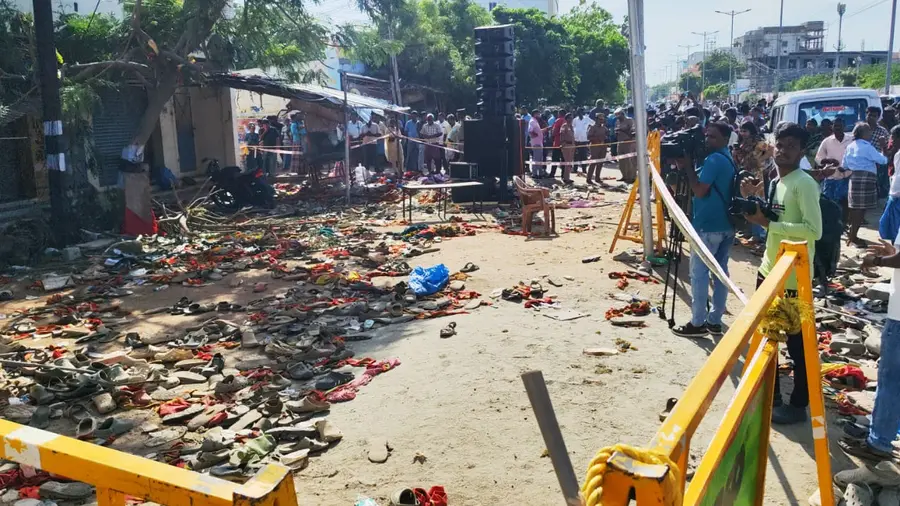
On September 27, during an election campaign meeting organized by the Tamilaga Vettri Kazhagam (TVK), a tragic crowd crush killed 41 people, including women and children, and injured more than a hundred others. Earlier, in February 2024, actor Vijay announced the formation of his political party under the name Tamilaga Vettri Kazhagam. He later declared his policies at the Vikravandi Conference on October 27, 2024. After holding a second state conference in Madurai on August 21, 2025, he began his state-wide election campaign in Trichy, meeting people every weekend.
Subsequently, after his visits to the Delta districts, for reasons unclear, he advanced his scheduled December rally in Karur to late September. The disastrous outcome of that rally brought not only shame to the party but also deep embarrassment to Tamil Nadu.
For nearly two years—from the Vikravandi conference up to the recent Karur meeting—TVK supporters have conducted themselves irresponsibly, causing great inconvenience to the public at every event. Defying police orders and warnings, they organized processions, paraded on streets, and vandalized public and private property. Every gathering resulted in some loss of life and property; airports in Madurai and Trichy were nearly ransacked. Visuals from the aftermath of these events resembled war zones. Neither actor Vijay nor his party leaders have offered an accountable explanation or accepted responsibility for any of these incidents.
When a similar case reached the High Court, the judges directed the creation of guidelines for public events. But before any action could be taken, the Karur tragedy struck. Several cases are now pending in court, and a central investigative agency is currently probing the incident.
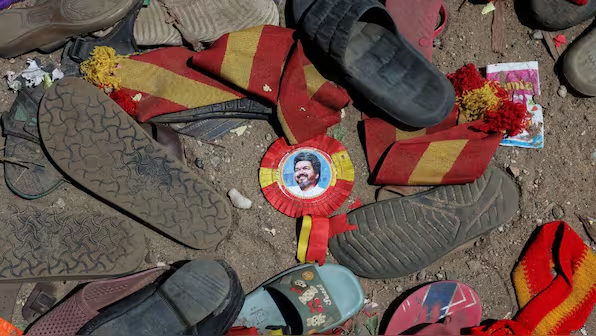
The Karur Incident – From Then to Now:
News of the deaths began to surface after 8 p.m. on September 27. Realizing the gravity of the situation, actor Vijay immediately returned to Chennai. Since the formation of his party, he had never held a press conference — and even after this enormous tragedy, he refused to meet the press. He merely posted a short message of condolence on social media that night and another the following day regarding compensation for the victims. Later, he released a five-minute video where, instead of expressing sorrow or taking moral responsibility, he attacked the DMK government in a film-like tone of challenge.
While Vijay secluded himself in Panaiyur, many senior party leaders, including General Secretary Bussy Anand, went into hiding. Spokespersons of the party also remained silent. Only his supporters kept flooding social media with conspiracy theories, accusations, and criticisms. Without visiting the affected families in Karur, Vijay arranged for them to meet him at a luxury resort near Mamallapuram on October 27 to offer condolences. This act stands as one of the most disgraceful precedents in Tamil Nadu’s political history.
The aftermath of TVK’s emergence has revealed how deeply Tamil society has been eroded by cinema glamour.
Tamil Society and Cinema Fascination:
Unlike any other linguistic community, Tamil society has always given immense importance to art and artists — from Sangam literature to contemporary works. Once an evolved and cultured community that loved the arts, Tamils perhaps began overindulging, especially in the performing arts. From the time of Silappathikaram, Tamil society has had a deep fascination with the art of Koothu (folk drama). Even during colonial times, this continued to thrive.
When cinema — the modern form of drama — arrived in Tamil Nadu in the early 1900s, it quickly became the people’s favorite pastime. During World War II, thousands of Tamils went as laborers to build the “Death Railway” near Thailand primarily because they were promised weekly movie screenings. Every wooden beam of that railway is said to have claimed the life of a Tamil worker. Books and short films have since depicted this tragic episode.
Recognizing this excessive love for cinema, the Dravidian movement cleverly used films to propagate its political ideology and gain power. Actors and screenwriters gained enormous influence in Tamil society. As a result, cinema and Tamil Nadu politics became inseparable. Five Chief Ministers of Tamil Nadu have come from the film industry. Even the present Chief Minister M.K. Stalin acted in a few films, and the Deputy Chief Minister Udhayanidhi Stalin is also an actor.
Veteran actor Rajinikanth oscillated for decades saying he would enter politics, while another senior actor Kamal Haasan launched Makkal Needhi Maiam, which eventually merged into the DMK. The list of actors who started political parties — from Sivaji Ganesan to Vishal — is long. In Tamil Nadu, it seems even a single hit film is enough for an actor to dream of becoming Chief Minister.
Forming a party is not the issue — but a tragedy where people die attending an actor’s political meeting is unprecedented. Never before in India have so many people lost their lives just to see a film star. This must be studied deeply by intellectuals as a social disaster. The Karur tragedy is a cross-section revealing the political, economic, and moral decay of Tamil society.
Cinema and Politics in Tamil Nadu:
Tamil Nadu has long been a pioneering state in India — for instance, the anti-Hindi agitation that inspired linguistic pride across the country. Decades ago, when other states surrendered to Hindi imposition, Tamil Nadu resisted even under military repression. Ironically, today’s youth who once fought for linguistic dignity are now the same generation that lost their lives in Karur — a tragic contradiction that shows the moral decline of Tamil youth.
Since 1967, the DMK and later the AIADMK (from 1977) have alternately ruled Tamil Nadu. Under decades of Dravidian rule, education has been commercialized, drugs and liquor normalized, employment opportunities crushed, industries dismantled, and social structures weakened — producing a generation of irresponsible youth.
Blinded by fame and wealth, they now worship actors and criminals as leaders, attending rallies with fanatic devotion that ends in death. They neither feel guilt nor introspect on why such tragedies happen or how to prevent them. This identity crisis prevents them from realizing who they truly are or who their real leaders should be.
This confused generation has lost the ability to ask:
What is truly important in my life?
Who are the real leaders who can guide my society forward?
What philosophy can uplift my community and nation?
This degeneration, the author argues, is largely due to the Dravidian parties — especially the DMK — which turned cinema glamour into an intoxicant, suppressing Tamil cultural values and moral living. The Karur incident is the starkest reflection of that collapse.
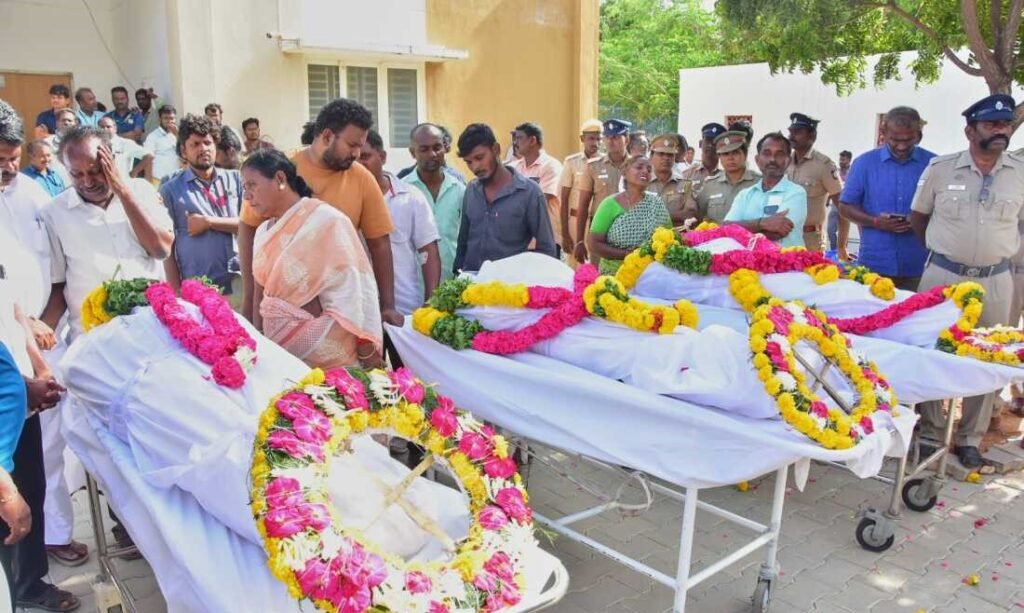
Should Actors Not Enter Politics?
The argument is not that actors should be banned from politics. No one is born a leader; every leader begins with a profession. Acting is a legitimate profession. But when acting becomes a shortcut to political power, it is the duty of responsible citizens to resist. Unqualified people in leadership destroy governance and endanger the future of society. History is filled with stories of tyrants who rose through charisma rather than merit.
Therefore, citizens must choose their leaders wisely and responsibly. Especially in a globalized era of complex challenges, the destiny of a nation depends on its leadership and guiding philosophy.
Why Political Leadership Matters:
Most modern nations have adopted democracy as their political philosophy. There are two forms — direct and representative democracy. In countries like Switzerland, citizens participate directly in governance through referendums and recalls. But in populous nations like India, representative democracy is more practical — people elect representatives to govern on their behalf.
India, the world’s largest democracy, functions under this representative system. Citizens elect members to Parliament and State Assemblies, from whom Prime Ministers and Chief Ministers emerge. Because political parties dominate this system, they profoundly influence public life.
Every political party operates on a guiding ideology — Congress on nationalism, the Left on socialism, BJP on Hindu nationalism, and regional parties on linguistic or state interests. Governance, in essence, is the exercise of power by these representatives for public welfare. The government’s decisions shape everything in citizens’ lives — from birth to death — and thus, the ideological foundation of a party matters immensely.
A political party is the bridge between the people and the government. Whether a government is benevolent or tyrannical depends on the party’s principles. Yet in post-independence India, over 75 years, democratic values have steadily eroded — replaced by corruption, bribery, criminal politics, administrative decay, and stagnation. Both national and regional parties share blame, as do the people who elect them.
Society is built from individuals and families; families form communities, and communities create governments. In monarchies, citizens had little choice — but in democracies, awareness and responsibility are vital. Political literacy, civic participation, and pressure for good governance are duties of every responsible citizen.
The Role of Directive Principles and Ambedkar’s Warning:
Our Constitution provides guiding principles for the welfare state. Dr. B.R. Ambedkar said in the Constituent Assembly:
“A government which ignores the Directive Principles while shaping its policy will certainly have to answer for that before the electorate at election time.”
This applies equally to political parties that form governments. In his final speech on November 25, 1949, Ambedkar also warned:
“In politics, hero-worship is a sure road to dictatorship.”
India, more than any other democracy, is plagued by this cult of hero-worship — a disease that leads only to decline and despotism.
Ambedkar, who spoke these words about great leaders of the freedom movement, reminds us how dangerous it is when today’s self-centered film stars seek the same reverence.
From a hunting tribe to an agrarian and then a commercial civilization, humanity’s progress has always depended on enlightened leaders and sound philosophies. For Tamil society today, choosing leaders with clarity and wisdom will not only secure the present generation but also shape the destiny of generations to come.
Mrs. Vimalini Senthilkumar,
Policy Propagation Secretary,
Senthamizhar Paasarai – Valaikuda (NTK Gulf Unit).